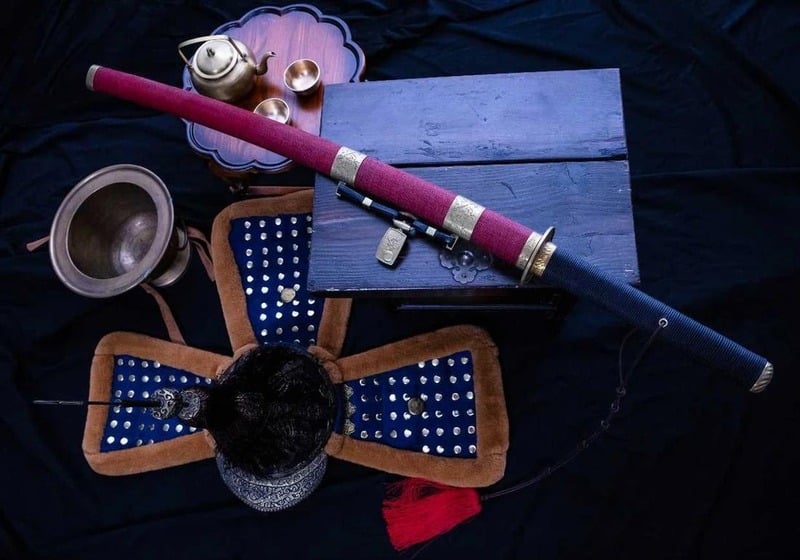
1,200 Years of Korean Tradition
THE HISTORY OF
KUMMOOYEH
검무예
1,200 Years of Korean Tradition
검무예
The Foundation
"Loyalty. Filial Piety.
Respect. Righteousness."
These four principles are not merely ideals — they are the living foundation of Kummooyeh. Every sword form, every arrow loosed, every technique practiced is an expression of these values handed down through centuries of Korean warrior tradition.
Origins
The roots of Kummooyeh reach back more than a millennium — through the Goguryeo, Silla, and Joseon dynasties — where the sword, bow, and shield were not weapons of conquest but instruments of discipline, honor, and the protection of one's people.
Korean warriors were trained not only in physical technique but in the moral and philosophical dimensions of combat. To wield a blade was to accept a responsibility — to one's ruler, one's family, and one's own character.
This inseparable bond between martial skill and personal virtue is what distinguishes Kummooyeh from mere fighting technique. It is, at its core, a complete path of human development.
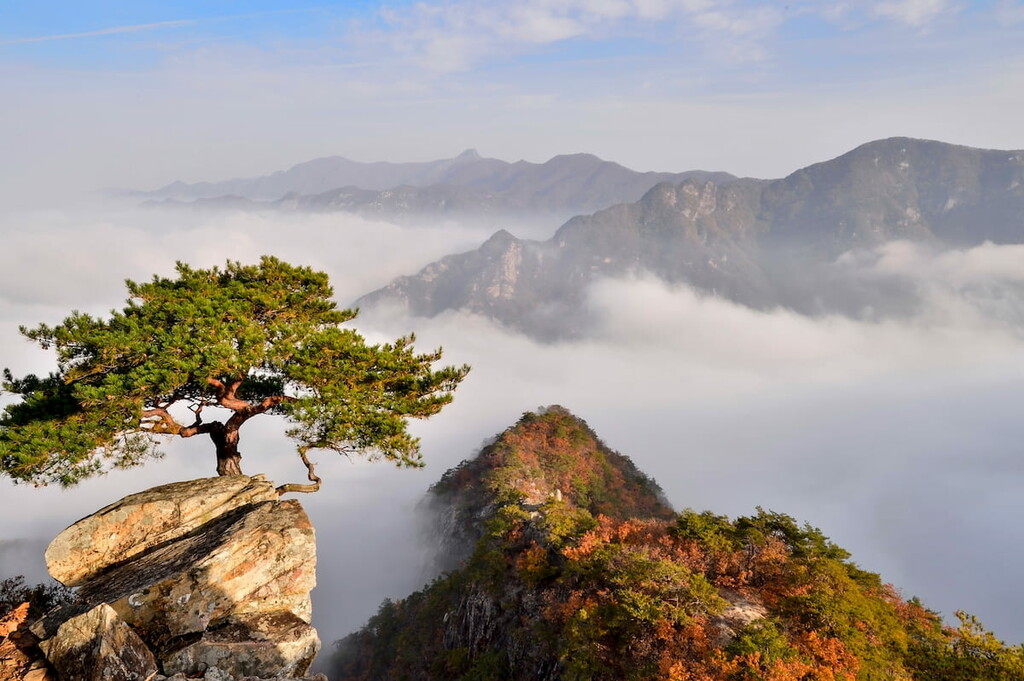
The 1790 Codex
무예도보통지
In 1790, under the reign of King Jeongjo of the Joseon Dynasty, a royal commission produced one of the most comprehensive military manuals in Korean history — the Muye Dobo Tongji, or "Comprehensive Illustrated Manual of Martial Arts."
Compiled by royal order following the devastation of the Imjin War (the Japanese invasions of 1592–1598), the treatise documented 24 distinct martial arts techniques used by the Korean military — preserving forms of combat that had been practiced for centuries but never formally recorded.
Among those 24 techniques were the sword forms, archery disciplines, and weapons training that form the direct foundation of modern Kummooyeh. The Muye Dobo Tongji is not merely a historical document — it is the living blueprint from which every practice session, every form, and every principle of Kummooyeh flows.
24
Martial arts techniques documented
1790
Year of compilation under King Jeongjo
234
Years of documented tradition behind every technique
Through the Centuries
3 Kingdoms Era
The Goguryeo, Baekje, and Silla kingdoms develop distinct warrior cultures. Sword and archery training become central to military and aristocratic life on the Korean peninsula.
Joseon Dynasty · 1392–1897
Korea's longest dynasty formalizes military training. Sword and archery arts are elevated as both practical combat skills and scholarly disciplines, studied alongside Confucian learning.
1592–1598
Japan's invasions of Korea devastate the peninsula but galvanize the Korean military. King Seonjo commissions an urgent review of combat techniques. The need to preserve these arts in writing becomes undeniable.
1790
King Jeongjo orders the compilation of the Muye Dobo Tongji — 24 martial arts techniques documented in unprecedented detail. This foundational text becomes the permanent record of Korean martial tradition, including the sword, bow, and shield forms that define Kummooyeh.
1910–1945
During Japanese colonial rule, traditional Korean culture is systematically suppressed. Many martial arts, including those documented in the Muye Dobo Tongji, are pushed underground or nearly lost entirely.
Post-1945 · Revival Era
Following Korean independence, scholars and martial artists work to recover what was nearly lost. Using the Muye Dobo Tongji as their guide, practitioners begin the painstaking work of reconstructing authentic Korean martial techniques.
Modern Era
Grandmaster Joung Bouk Soo establishes Kummooyeh as a formal, teachable system — combining the historical accuracy of the Muye Dobo Tongji with a structured curriculum accessible to practitioners worldwide. The World Kummooyeh Federation is founded and officially recognized by the South Korean government.
USA Chapter
President Moon K. Kim — 8th Dan Kummooyeh, 9th Dan Tang Soo Do, two-time World Champion — establishes the USA Kummooyeh Federation, bringing authentic Korean sword, archery, and martial arts training to students and martial artists across the United States.
The Art Today
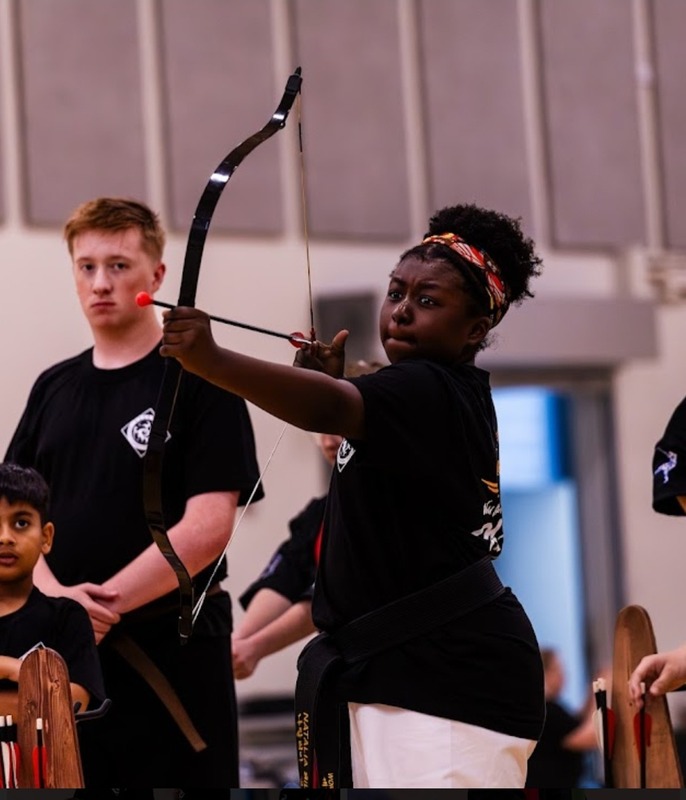
Today's Kummooyeh curriculum encompasses seven core disciplines — from the flowing forms of Gumbup (sword forms) and the precision of Gungdo (archery) to the power of Begi (cutting), the dynamic exchanges of Gyojeon (sparring), and the ancient techniques of Deungpae (shield), Woldo (moon blade), and meditative Danjeon breathing.
Each discipline traces its lineage directly to the Muye Dobo Tongji. Each technique carries within it the memory of those Korean warriors who refined it, the scholars who preserved it, and the masters who passed it forward.
Explore the Curriculum →