Rooted in the Muye Dobo Tongji
THE CURRICULUM
Seven Disciplines · One Path
Rooted in the Muye Dobo Tongji
Seven Disciplines · One Path
What You Will Study
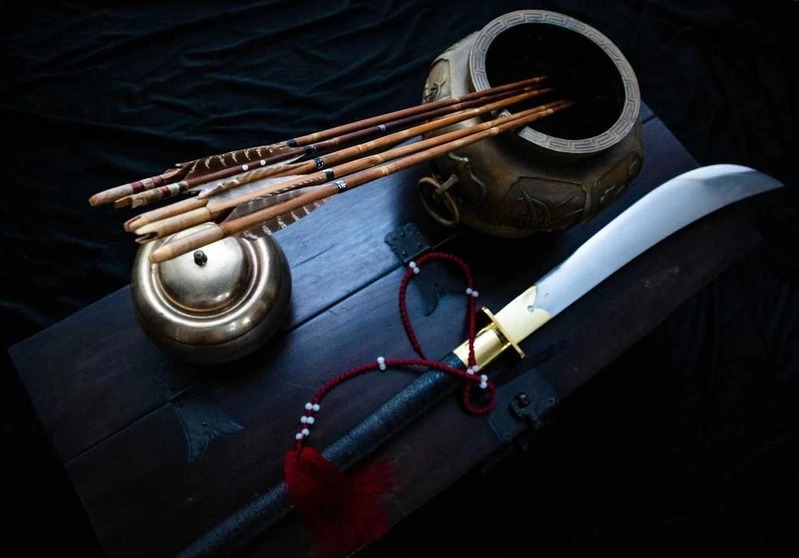
The Kummooyeh curriculum draws directly from the Muye Dobo Tongji — the 1790 Korean royal treatise that codified 24 martial arts techniques. Each of the seven disciplines taught today traces its lineage to that document, preserved across centuries and brought into the modern world without compromise.
Together, these seven disciplines form a complete system — developing the body through sword, bow, and weapon training, and developing the mind through sparring, breath, and meditative practice.
Discipline 01
검법
Sword Forms
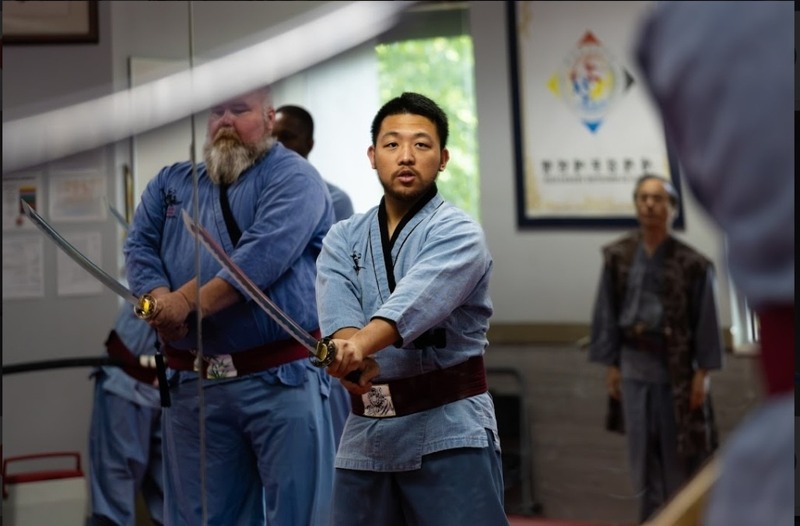
Gumbup is the heart of Kummooyeh — the flowing forms through which a student first learns to speak the language of the sword. Each form (bup) is a choreographed sequence of techniques drawn directly from the Muye Dobo Tongji, encoding centuries of battlefield wisdom into repeatable, teachable movement.
Practice develops proper posture, footwork, blade angle, and the internal focus that distinguishes true mastery from mere physical skill. Over time, the forms stop being memorized sequences and become natural expression.
Body mechanics
Posture, footwork, and blade alignment from the ground up
Historical form
Sequences documented in the 1790 Muye Dobo Tongji
Blade control
Precision and intentionality with every movement
Mind-body unity
Concentration and internal focus through repetition
Discipline 02
교전
Sparring
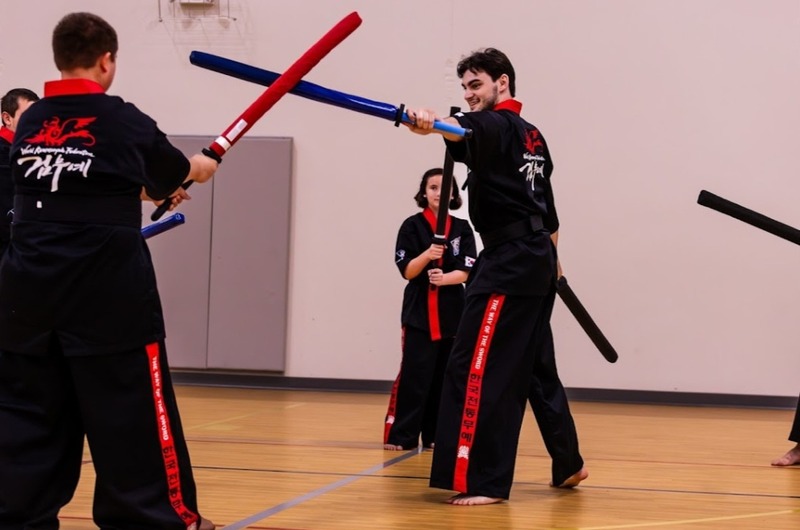
Gyojeon takes the individual techniques of Gumbup and brings them to life in a cooperative combat setting. Training with a partner, students develop the timing, adaptability, and presence of mind that forms cannot develop alone.
More than a combat exercise, Gyojeon is a practice in respect. Every exchange begins and ends with acknowledgment of your partner — reflecting Kummooyeh's core values in every session.
Timing & reaction
Reading and responding to a live opponent
Controlled contact
Safe, structured training with a partner
Adaptability
Applying technique under dynamic, unpredictable conditions
Mutual respect
The foundational ethic that governs every exchange
Discipline 03
베기

Cutting
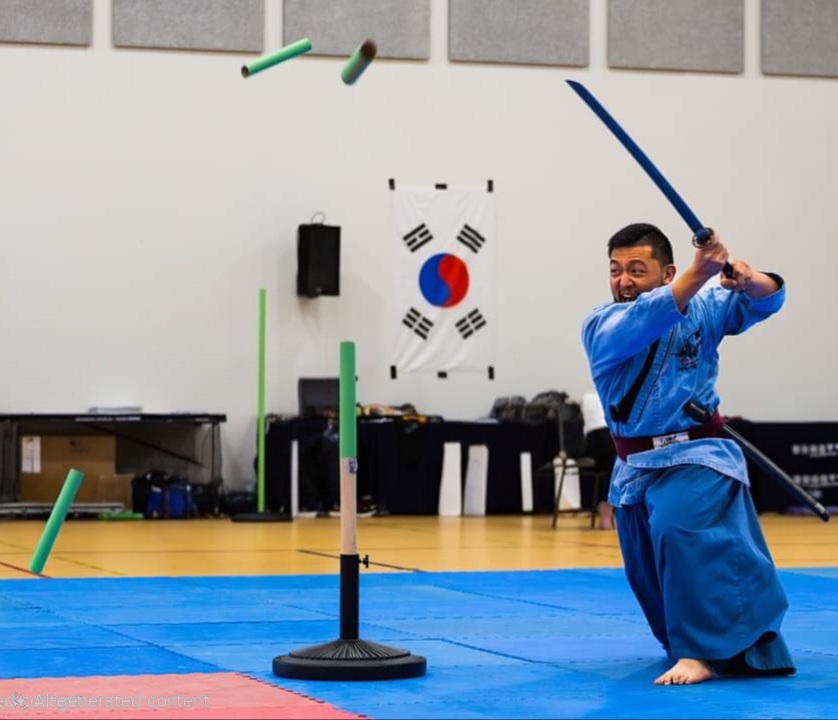
Begi demands full commitment. The practitioner applies blade technique against real targets — both stationary and moving — requiring complete accuracy, correct mechanics, and total mental presence. There is no room for approximation.
Unlike forms practice, Begi immediately reveals what is correct and what is not. The blade tells the truth. In this way, cutting practice is one of the most honest teachers in the entire curriculum.
Live-blade confidence
Training with a real, sharp blade under careful instruction
Accuracy & power
Developing a true, committed cut through fixed and moving targets
Technique validation
The cut reveals what is correct — instant feedback on form quality
Mental presence
Total focus demanded by the nature of the exercise
Discipline 04
궁도
Archery
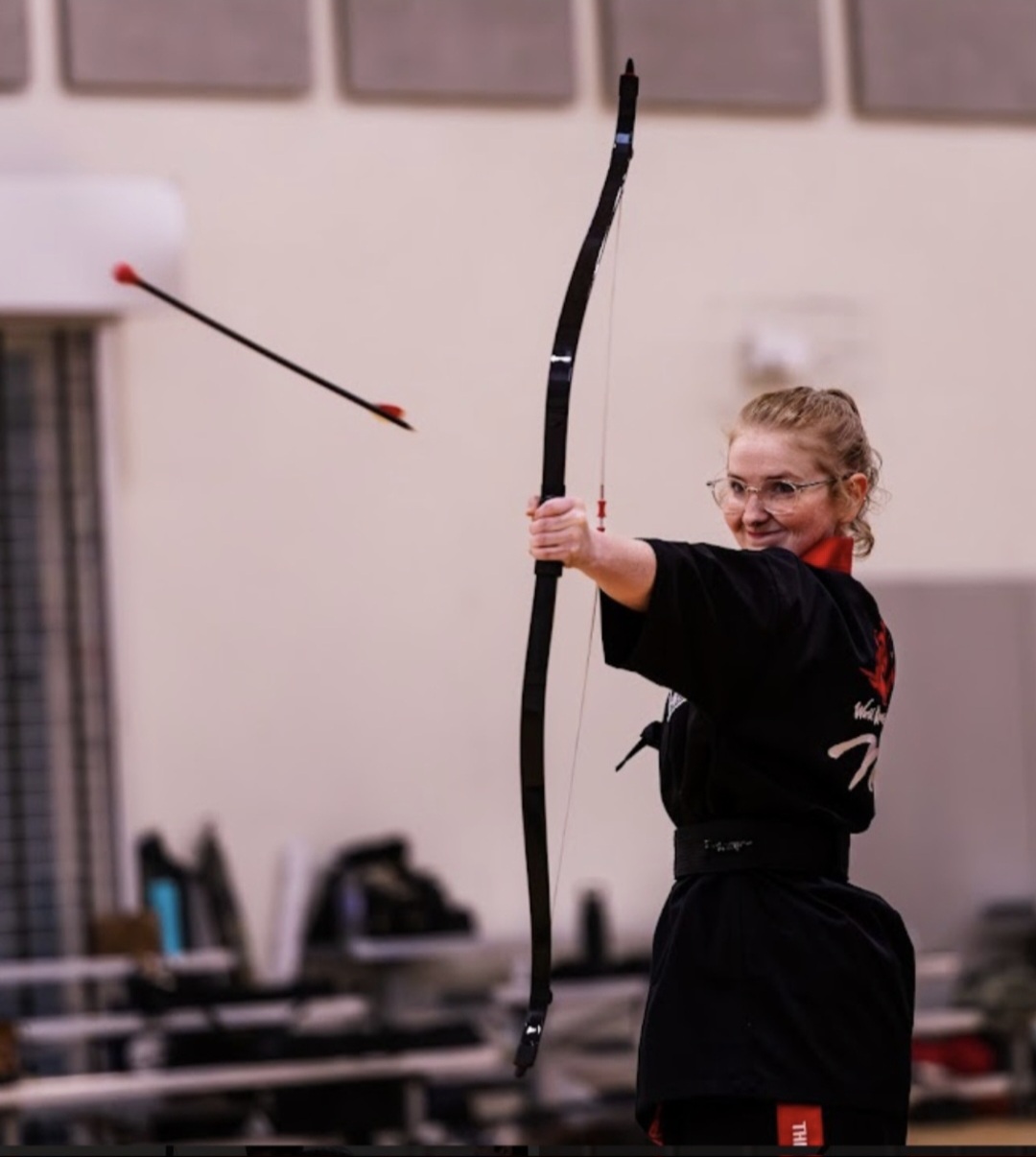
Traditional Korean archery is one of the most meditative disciplines in the curriculum. Using the traditional Korean composite bow — a powerful recurve weapon designed for speed and reach — students develop extraordinary focus, breath control, and stillness of mind.
Gungdo builds a quality of concentration that transfers to every other aspect of training and daily life. The bow rewards patience. It cannot be forced. The archer must become quiet before the arrow can fly true.
Traditional Korean bow
The composite recurve bow — fast, powerful, and demanding
Breath control
The archer's breath determines the shot before release
Physical conditioning
Upper body strength, stability, and endurance developed through practice
Patience & stillness
The mental discipline to wait for the right moment
Discipline 05
단전호흡
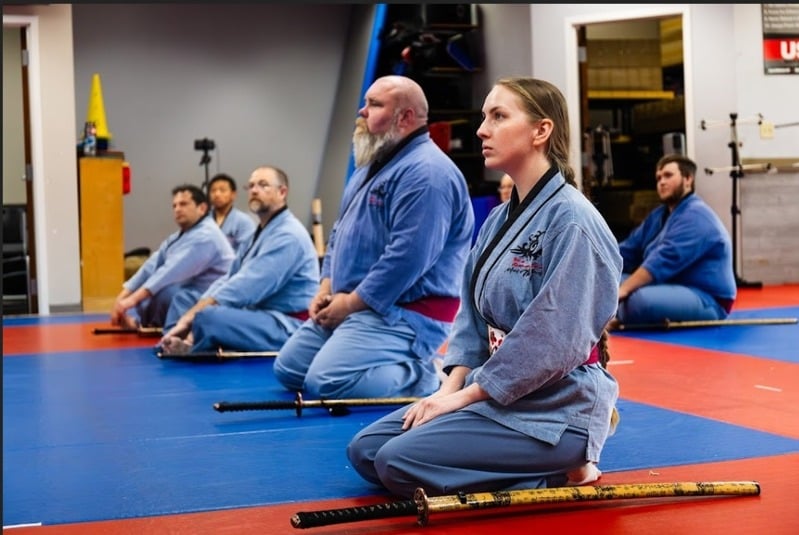
Breathing & Meditation
Danjeon breathing is not a warm-up or cool-down — it is a core discipline in its own right. Students learn to harness and direct internal energy (ki) through breath, calming the mind and preparing the body for the demands of external technique.
In Korean martial tradition, the danjeon (the energy center below the navel) is considered the seat of physical and spiritual power. Training this center through disciplined breathing practice is inseparable from mastery of the art.
Internal energy
Cultivating and directing ki through structured breath practice
Mental clarity
Reducing stress and sharpening focus before and after training
Philosophical depth
The internal dimension that gives the external techniques their meaning
Breath & movement
Synchronizing breath with technique for greater power and efficiency
Discipline 06
등패
Shield
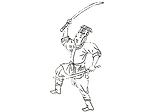
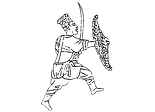
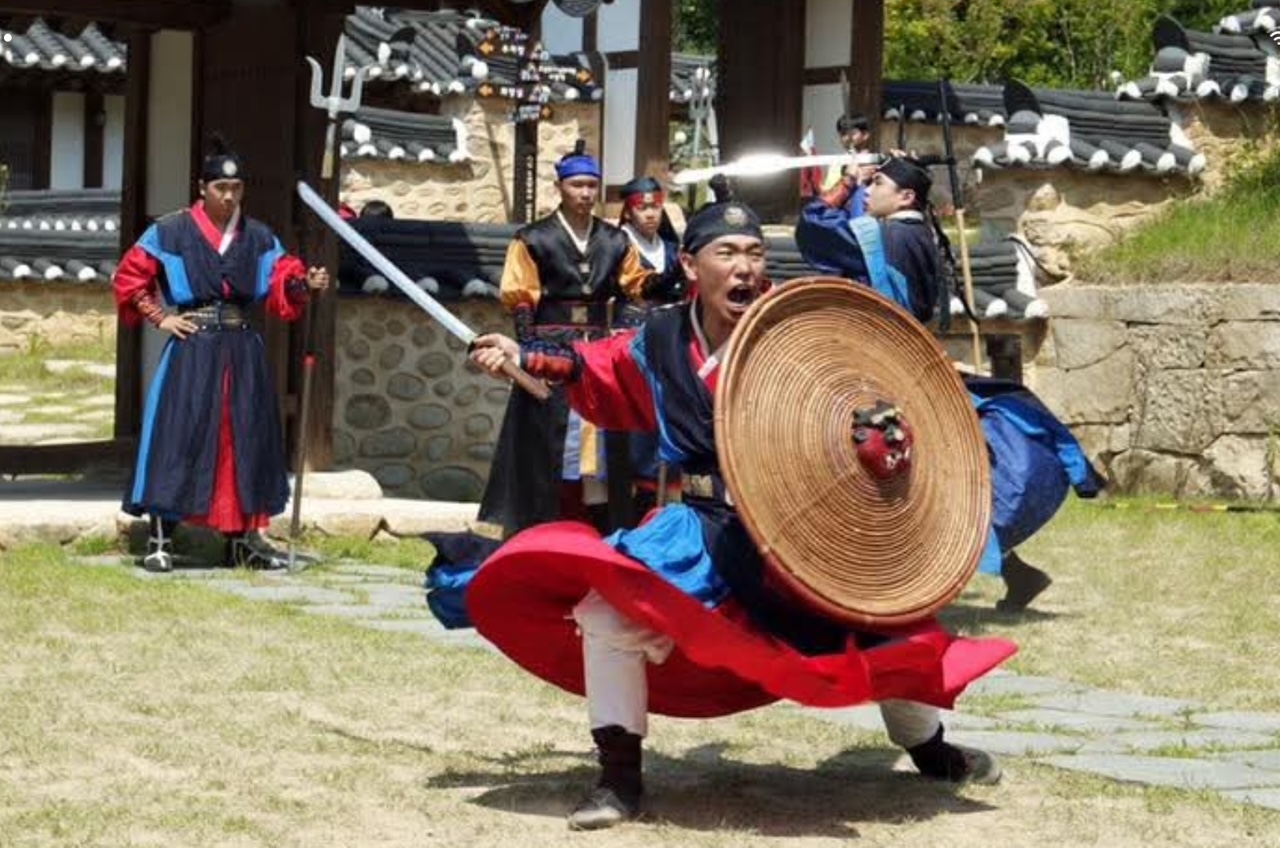
The Deungpae — a traditional shield woven from wisteria and bamboo — was a staple of Korean military formations during the Joseon Dynasty. Light, resilient, and capable of deflecting arrows, it paired with the short sword in combat situations that demanded both offense and defense simultaneously.
Deungpae training develops spatial awareness, coordination between weapon and shield, and a defensive mindset that complements and deepens all other disciplines.
Defensive technique
Blocking, deflecting, and controlling space with the shield
Dual-weapon coordination
Simultaneous control of shield and short sword
Historical context
Understanding how shields functioned in Korean military formations
Agility & footwork
Quick movement and spatial control in defensive situations
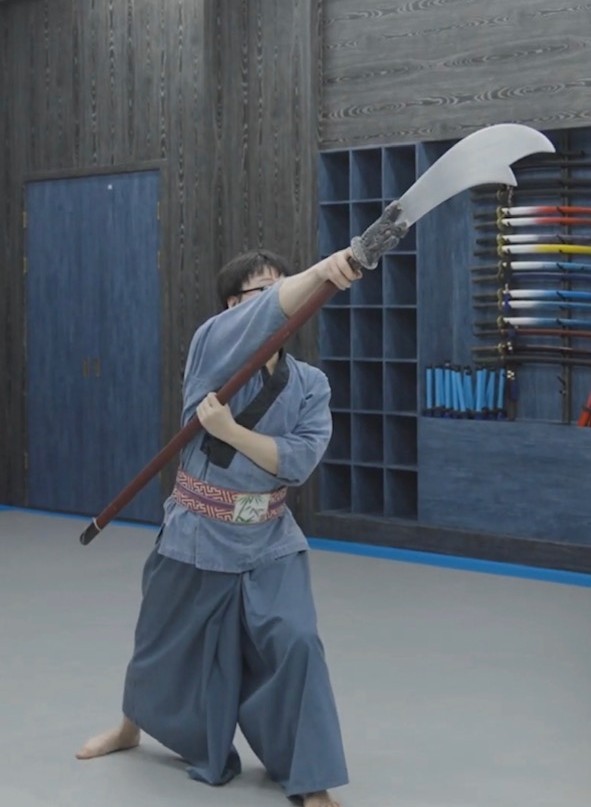
Discipline 07
월도

Moon Blade
The Woldo — named for the crescent-moon curve of its blade — is a single-edged polearm weapon combining reach, weight, and sweeping power. Documented in the Muye Dobo Tongji, it demands a fundamentally different relationship with weapon and space than the short sword disciplines.
Training with the Woldo develops an understanding of momentum, leverage, and the mechanics of wide-arc technique. It is one of the most visually striking weapons in the curriculum — and one of the most demanding to master.
Polearm technique
Managing reach, weight, and wide-arc cutting strikes
Power generation
Using the weapon's weight and momentum rather than brute strength
Advanced footwork
Rotational movement and spatial control with a long weapon
Historical forms
Sequences preserved directly from the Muye Dobo Tongji
Bring the Curriculum to Your School
The USA Kummooyeh Federation offers seminars across all seven disciplines for martial arts schools and organizations. Contact us to discuss bringing an authentic Kummooyeh experience to your students.
View Seminar Information